BLOG

















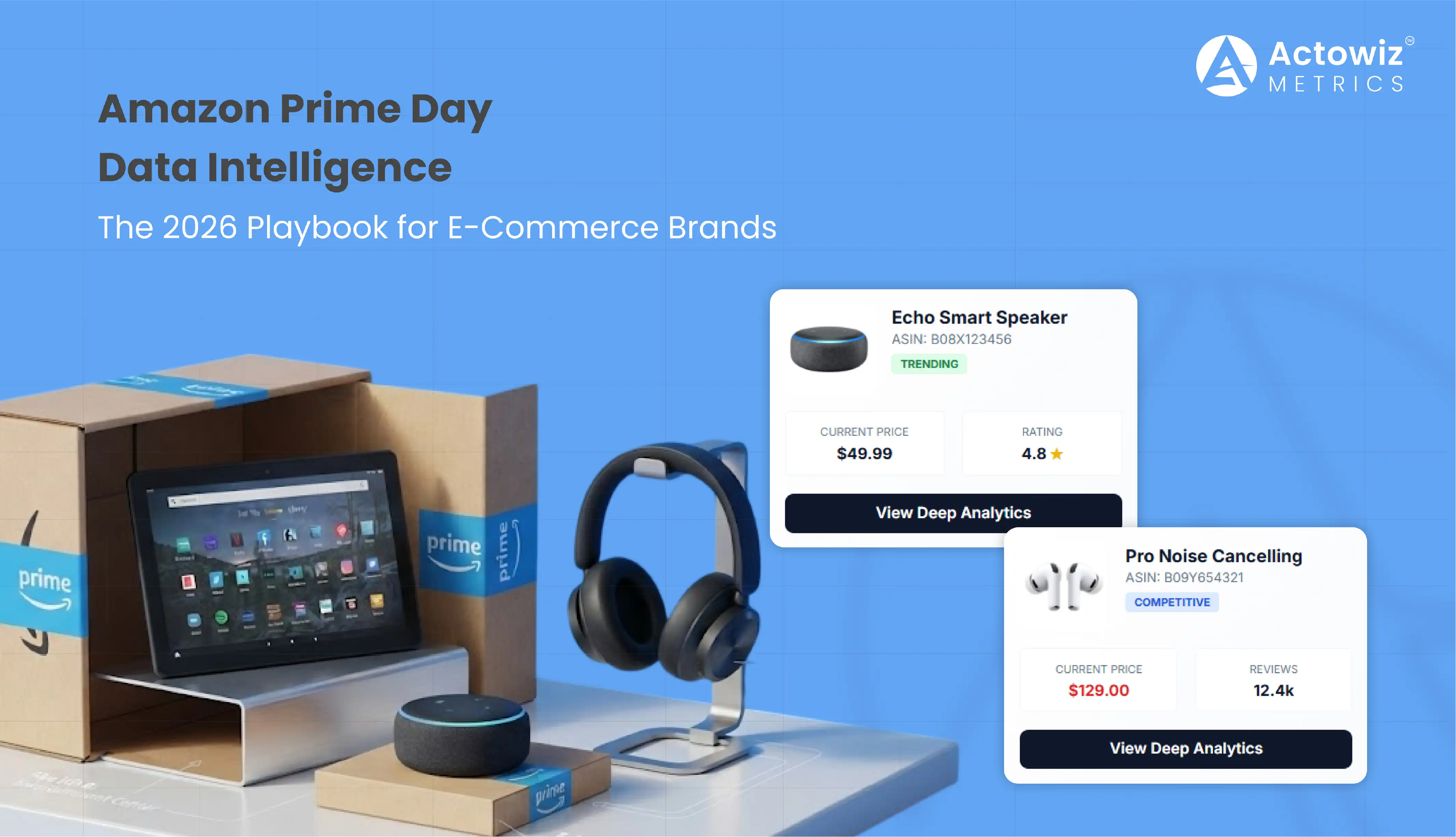
Amazon Prime Day has become the single most concentrated demand event on the retail calendar. In just a few days, shopper intent, advertising competition, and price volatility all peak at once, and the brands that come out ahead are rarely the ones with the deepest discounts. They are the ones with the clearest view of the shelf. Amazon Prime Day data intelligence—the discipline of continuously collecting, structuring, and acting on live marketplace data—has quietly become the deciding factor between brands that merely participate in Prime Day and those that dominate it.
Prime Day 2026 ran from June 23 to June 26 across 26 countries, arriving in June instead of its traditional July slot and compressing every preparation timeline sellers had grown used to. That shift alone caught many brands off guard. The deeper lesson from this year's event, however, is that manual monitoring simply cannot keep pace with a marketplace where prices, rankings, and stock levels change by the minute. This research report examines how e-commerce brands can convert raw Amazon data into a durable competitive advantage, which datasets matter most, and how Actowiz Metrics helps teams operationalize this intelligence before, during, and after every major sales event.
For a decade, sellers built their calendars around a July event. Prime Day 2026 broke that habit. By moving the four-day sale to June 23–26, Amazon pulled the entire funnel forward: early deals surfaced in late May, inventory deadlines tightened, and advertising auctions heated up weeks sooner than most planners expected. Reports linked the earlier timing to an unusually crowded July, with the FIFA World Cup and the United States' 250th Independence Day competing for attention and logistics capacity.
For brands, the practical consequence is simple but severe. A compressed calendar removes the buffer that used to absorb planning mistakes. A pricing miscalculation, a late inventory shipment, or a stale listing now costs more because there is less time to recover. That is precisely why Amazon Prime Day data intelligence has moved from a nice-to-have to a core operational requirement. When the margin for error shrinks, the value of knowing exactly what is happening on the shelf—right now—rises sharply.
During an average shopping day, a brand can afford to check its listings once and move on. Prime Day is different. Order velocity spikes several times over, competitors reprice aggressively, and the Buy Box changes hands throughout the day. In that environment, a static snapshot taken the night before is already obsolete by mid-morning. The brands that thrive treat data as a live feed rather than a monthly report.
Effective Amazon price monitoring during Prime Day is not about watching a single competitor. It is about capturing thousands of data points per hour—prices, Buy Box ownership, stock signals, review counts, and search ranks—across an entire competitive set, then surfacing the handful of changes that actually demand a decision. Doing this by hand is impossible at scale. This is where automated Amazon product data scraping and structured delivery become the backbone of a modern Prime Day strategy. The goal is not more data; it is faster, cleaner, decision-ready data.
To make this concrete, the tables below show representative samples of the structured datasets Actowiz Metrics delivers for Prime Day monitoring. The values are illustrative, but the schema mirrors what brands receive in production—clean, timestamped, and ready to feed into dashboards, pricing rules, or alerting systems.
| ASIN | Product Title | Brand | MRP | Prime Day Price | Disc. | Buy Box | Captured At |
|---|---|---|---|---|---|---|---|
| B08N5WRWNW | Wireless Earbuds Pro | BrandVista | $129.99 | $79.99 | 38% | Won | 06-23 08:15 |
| B07QK1FZ2M | Wireless Earbuds Pro | SoundEdge | $119.99 | $69.99 | 42% | Lost | 06-23 08:15 |
| B09XYZ8LMN | Wireless Earbuds Pro | PulseAudio | $124.99 | $74.99 | 40% | Lost | 06-23 08:15 |
| B08N5WRWNW | Wireless Earbuds Pro | BrandVista | $129.99 | $74.99 | 42% | Won | 06-23 13:40 |
| B07QK1FZ2M | Wireless Earbuds Pro | SoundEdge | $119.99 | $66.49 | 45% | Won | 06-23 13:40 |
| ASIN | SKU | Stock Status | Est. Units | Seller | Fulfillment | Captured At |
|---|---|---|---|---|---|---|
| B08N5WRWNW | EAR-PRO-BLK | In Stock | 1,240 | BrandVista | FBA | 06-24 09:00 |
| B08N5WRWNW | EAR-PRO-WHT | Low Stock | 85 | BrandVista | FBA | 06-24 09:00 |
| B09XYZ8LMN | EAR-PLS-BLK | Out of Stock | 0 | PulseAudio | FBA | 06-24 09:00 |
| B07QK1FZ2M | EAR-EDG-BLK | In Stock | 640 | SoundEdge | FBM | 06-24 09:00 |
| ASIN | Product | Avg Rating | Reviews | New (7d) | Neg. % | Top Complaint |
|---|---|---|---|---|---|---|
| B08N5WRWNW | Wireless Earbuds Pro | 4.5 | 12,480 | 312 | 9% | Battery life |
| B07QK1FZ2M | Wireless Earbuds Pro | 4.1 | 8,905 | 204 | 17% | Connectivity |
| B09XYZ8LMN | Wireless Earbuds Pro | 4.6 | 5,220 | 141 | 7% | Fit / comfort |
Turning these datasets into results requires a repeatable framework. The seven pillars below define how leading e-commerce brands apply Amazon Prime Day data intelligence across the full event lifecycle—from the quiet weeks of preparation to the frantic hours of the sale and the analysis that follows.
Across the datasets Actowiz Metrics monitors, several patterns recurred during the June 2026 event and are worth folding into planning for the next one. The observations below are drawn from representative marketplace data and are meant to illustrate the kind of signal structured monitoring surfaces.
None of these signals are visible from a once-a-day manual check. They emerge only from continuous, structured Amazon marketplace data—the foundation of effective Amazon Prime Day data intelligence.
Data intelligence delivers value only when it flows cleanly from collection to decision. A practical Prime Day workflow moves through four stages, and each one benefits from automation. The first stage is extraction: defining the ASINs, competitors, keywords, and geographies to monitor, then scraping them at a cadence that matches the volatility of the event—daily in the lead-up, and as often as every few minutes during peak hours.
The second stage is structuring. Raw marketplace data is messy, so it must be cleaned, deduplicated, and standardized into consistent fields like the ones shown in the sample tables above. The third stage is distribution: pushing that structured data into the tools a team already lives in, whether that is a pricing engine, a BI dashboard, or a Slack alert. The fourth and most important stage is action—defining, in advance, exactly what a given signal should trigger. A competitor dropping below your floor price, a hero SKU slipping into low stock, or a sudden rank decline should each map to a predetermined response. When this workflow is built before Prime Day rather than during it, the team spends the event executing a plan instead of improvising one. Actowiz Metrics supports every stage of this pipeline, from extraction through delivery, so brands arrive at the event with a system rather than a scramble.
Actowiz Metrics specializes in turning the chaos of the Amazon marketplace into clean, decision-ready data. Rather than a rigid one-size-fits-all dashboard, we build extraction pipelines around each brand's specific catalog, competitive set, categories, and target geographies. That means you monitor the ASINs that matter to you, at the frequency your strategy demands, in the format your team already uses.
Our Prime Day data intelligence solution covers competitor price tracking, Buy Box monitoring, inventory and availability signals, ratings and reviews extraction, and share-of-search measurement—delivered through scheduled feeds, APIs, or ready-to-use datasets. Data is validated for accuracy and structured so it flows straight into your pricing engine, BI tools, or alerting workflow. The result is a team that spends its energy making decisions instead of chasing screenshots, and a brand that responds to the shelf in minutes rather than hours.
Prime Day rewards preparation, speed, and clarity—and all three now depend on data. As the event moves earlier and the competition intensifies, the brands that win are those that can see the whole shelf and act on it in real time. Amazon Prime Day data intelligence is what makes that possible, converting a flood of raw marketplace signals into the handful of decisions that actually protect margin, capture demand, and grow rank.
Ready to build a data-driven advantage for Fall Prime Big Deal Days and Prime Day 2027? Partner with Actowiz Metrics for custom Amazon Prime Day data intelligence built around your catalog. Request a sample dataset or a scoping call today, and turn the next sales event into your strongest one yet.
Expert blogs, research reports and infographics — practical, data-driven reading across e-commerce and quick-commerce.
Most fields are optional — the more you share, the better your sample.


.webp "infographics")
.webp "infographics")