When a shopper asks ChatGPT or Gemini "what's the
best protein bar to buy?", the assistant names just two or three brands. Share of AI measures
whether one of them is yours.
What is Share of AI?
Share of AI is the percentage of relevant AI shopping answers in
which your brand is mentioned or
recommended, compared with competitors. In plain terms: when a shopper asks an AI assistant
what to buy, Share of AI tells you how often the answer includes your brand — and how often it's
someone else's.
It applies across the AI assistants shoppers actually use, including
ChatGPT, Google Gemini,
Perplexity and Amazon Rufus. A high Share of AI means AI consistently puts your brand in front of
buyers at the moment of decision. A low one means you're invisible in a channel that's growing fast.
Why Share of AI matters now
For two decades, product discovery meant search: a shopper typed a
query, scanned a page of results,
and chose. AI assistants compress that entire process into a single answer that names only a handful
of brands. That shift changes the economics of visibility:
- Winner takes most. An AI answer rarely lists ten options — it names two or three. If
you're not one of them, you're not in the consideration set at all.
- The decision moves earlier. Many shoppers act on the AI's recommendation without ever
visiting a results page, so the sale can be won or lost before your product page is seen.
- It's a blind spot. Your existing dashboards track search rank, price and reviews — but
nothing tells you what the AI says about you.
The bottom line: as "ask AI" replaces
"search and browse" for a growing share of purchases, Share of AI becomes a leading indicator of
demand — and an early warning when you're losing ground.
Share of AI vs share of search
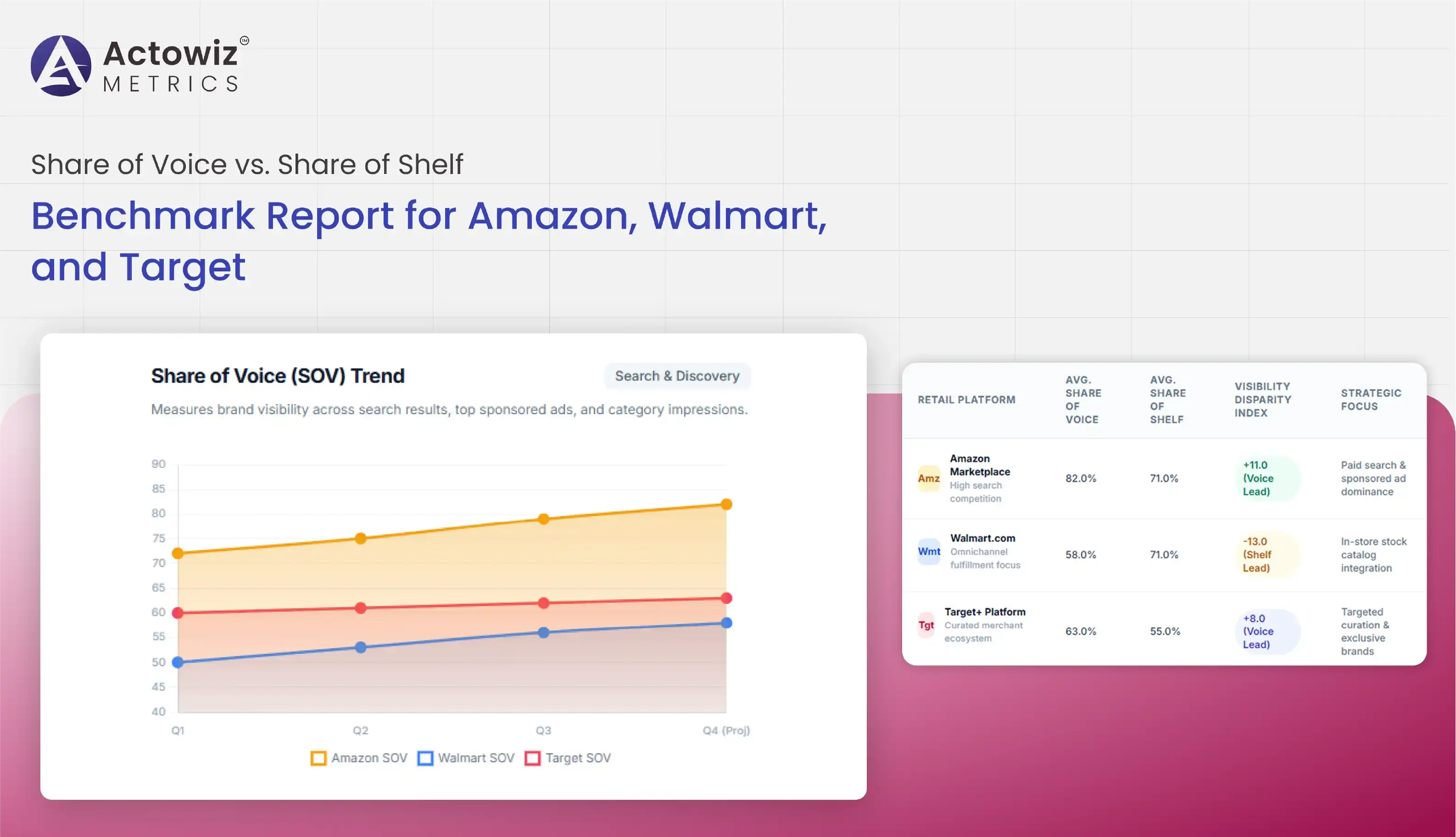
They sound similar but measure different things. Share of search
measures your visibility
within marketplace or search-engine results — a page where the shopper still chooses among many
listings. Share of AI measures your visibility inside an AI-generated answer that has already
narrowed the field to a few brands.
Because an AI answer names so few options, each mention is far more
decisive than a single search
result. The two metrics are complementary: share of search tells you if shoppers can find you; Share
of AI tells you if the AI recommends you.
How Share of AI is measured
Measuring Share of AI means systematically asking AI assistants the questions your shoppers really
ask, then analysing the answers:
- Map the questions. Identify the real buying questions in your category and geographies —
"best X for Y", "X under ₹500", and so on.
- Query at scale. Run those questions across the major AI assistants, repeatedly, to
capture consistent patterns rather than one-off answers.
- Score and benchmark. Calculate how often your brand is named versus competitors, and
track it over time.
- Capture the sources. Record which pages, reviews and retailers each answer draws on —
because those sources are the levers you can influence.
How to improve your Share of AI
AI assistants build answers from the information available about your category. Improving Share of AI
generally means strengthening the signals AI relies on:
- Reviews and ratings — strong, recent, authentic reviews on the marketplaces AI
references.
- Marketplace content — clear, accurate, well-structured product listings.
- Authoritative and third-party mentions — credible pages, guides and sources that describe
your products.
- Consistency — accurate, consistent brand and product information across the web.
Crucially, you can't improve what you can't measure. Tracking Share of
AI over time — and the sources
behind it — is what turns AI visibility from guesswork into a managed metric.
Actowiz tracks Share of AI across
ChatGPT, Gemini, Perplexity and Amazon Rufus, benchmarks you against competitors, and surfaces the
sources driving each answer — so you can act.
Learn more →

.webp "infographics")
.webp "infographics")