BLOG















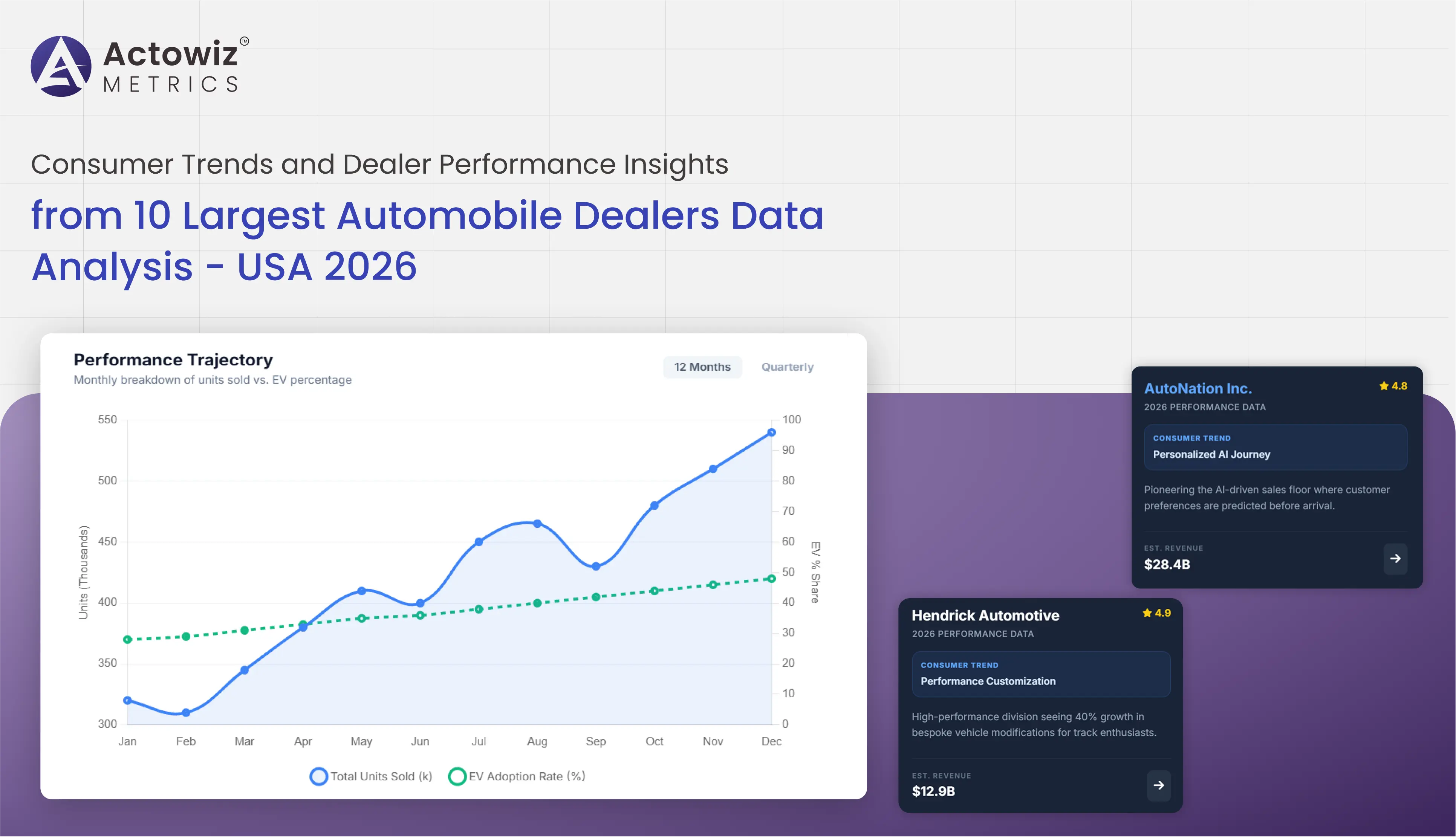
The U.S. automotive retail industry continues to experience major transformation as dealerships adapt to evolving consumer expectations, digital retailing, inventory shortages, and dynamic vehicle pricing trends. Dealership groups increasingly rely on real-time data intelligence to improve pricing strategies, optimize inventory planning, and strengthen customer engagement across both online and offline sales channels. This research report on 10 Largest Automobile Dealers Data Analysis - USA 2026 explores how leading automobile dealer networks are leveraging technology-driven insights to improve operational efficiency and market competitiveness.
Modern automotive businesses increasingly depend on advanced Pricing and Promotion intelligence to monitor vehicle demand fluctuations, competitor pricing activity, financing offers, and dealership performance trends. Between 2020 and 2026, the automotive industry experienced significant volatility due to supply chain disruptions, semiconductor shortages, rising EV adoption, and changing consumer buying preferences. These market shifts accelerated the adoption of digital retailing platforms, predictive inventory management, and automated pricing optimization systems.
Leading U.S. dealership groups now utilize marketplace intelligence to monitor vehicle listings, identify high-demand inventory segments, analyze customer behavior, and forecast pricing trends more accurately. Data-driven analytics help dealer networks improve promotional effectiveness, optimize inventory turnover, and enhance customer satisfaction across highly competitive automotive markets.
This report provides detailed insights into dealership performance trends, inventory movements, consumer behavior, and technology adoption patterns shaping the future of the U.S. automotive retail ecosystem through 2026.
Consumer demand patterns within the automotive retail industry shifted dramatically between 2020 and 2026 as buyers increasingly embraced online vehicle research, digital financing, and omnichannel purchasing experiences. Through Scraping Top Automobile Dealers Data In The United States, businesses gain visibility into pricing trends, inventory fluctuations, and dealership-level sales activity across major dealer networks. Combined with Comprehensive Marketplace Data Tracking, automotive retailers can better evaluate consumer demand patterns and regional sales performance.
SUVs, hybrid vehicles, and electric vehicles experienced the strongest growth during the forecast period, while compact sedans showed slower sales momentum due to changing consumer lifestyle preferences. Buyers increasingly prioritized fuel efficiency, advanced driver-assistance systems, and flexible financing options when selecting new vehicles.
| Year | Online Vehicle Research Usage | EV Market Share | Avg. Vehicle Selling Price (USD) | Dealer Inventory Days |
|---|---|---|---|---|
| 2020 | 62% | 3% | 36,000 | 68 |
| 2021 | 67% | 5% | 39,500 | 59 |
| 2022 | 71% | 7% | 43,000 | 52 |
| 2023 | 75% | 10% | 46,500 | 47 |
| 2024 | 79% | 13% | 49,000 | 42 |
| 2025 | 83% | 16% | 52,000 | 39 |
| 2026 | 86% | 19% | 55,500 | 35 |
Automotive retailers using predictive analytics and marketplace intelligence improved inventory allocation while responding faster to changing regional demand conditions and pricing pressures.
Automobile dealership groups accelerated digital transformation initiatives between 2020 and 2026 to improve customer experience and operational efficiency. Through Web Scraping Auto Dealer Networks Data USA, businesses can monitor dealer inventory, promotional campaigns, financing offers, and regional pricing trends across competing dealership groups.
Consumers increasingly adopted online financing pre-approvals, digital trade-in evaluations, and virtual showroom experiences before visiting physical dealerships. Dealer groups also expanded investments in AI-powered lead management systems and customer retention platforms to improve conversion rates.
| Year | Digital Financing Adoption | Online Vehicle Reservations | Virtual Showroom Usage | Customer Retention Rate |
|---|---|---|---|---|
| 2020 | 18% | 7% | 5% | 49% |
| 2021 | 24% | 11% | 9% | 53% |
| 2022 | 31% | 16% | 15% | 57% |
| 2023 | 39% | 21% | 22% | 61% |
| 2024 | 47% | 27% | 29% | 65% |
| 2025 | 55% | 34% | 35% | 69% |
| 2026 | 63% | 41% | 42% | 73% |
Digital retailing platforms significantly improved lead generation efficiency and customer engagement. Dealers leveraging advanced analytics reduced customer acquisition costs while improving sales conversion rates across new and used vehicle segments.
Inventory management became increasingly critical for automobile dealerships due to supply chain disruptions and fluctuating vehicle availability. Businesses that Scrape Vehicle Pricing And Inventory Data From Dealers gain continuous visibility into vehicle pricing changes, inventory turnover, and regional stock shortages.
Between 2020 and 2026, vehicle pricing volatility increased substantially as limited inventory availability drove higher transaction prices. Dealers relied heavily on automated inventory analytics to optimize stock replenishment and promotional timing.
| Year | Avg. Used Vehicle Price (USD) | Avg. New Vehicle Price (USD) | Inventory Turnover Rate | Avg. Incentive Spending |
|---|---|---|---|---|
| 2020 | 21,000 | 36,000 | 7.2x | 3,200 |
| 2021 | 24,500 | 39,500 | 7.8x | 2,900 |
| 2022 | 28,000 | 43,000 | 8.1x | 2,600 |
| 2023 | 30,500 | 46,500 | 8.4x | 2,450 |
| 2024 | 32,000 | 49,000 | 8.8x | 2,300 |
| 2025 | 34,000 | 52,000 | 9.1x | 2,150 |
| 2026 | 36,500 | 55,500 | 9.5x | 2,000 |
Advanced inventory monitoring enabled dealers to identify high-demand models faster, reduce aging inventory, and improve profitability through dynamic pricing optimization strategies.
Competition among leading U.S. dealership groups intensified as consumers gained greater pricing transparency through online vehicle marketplaces. Businesses that Track 10 Largest Automobile Dealers Data - USA 2026 gain actionable insights into dealership expansion strategies, pricing competitiveness, and promotional effectiveness across regional markets.
Dealership groups increasingly focused on EV inventory expansion, subscription-based ownership models, and value-added customer services to strengthen differentiation within highly competitive automotive markets.
| Dealer Category | Market Share 2020 | Market Share 2026 | Avg. Growth Rate |
|---|---|---|---|
| Franchise Dealerships | 71% | 68% | -3% |
| Independent Dealers | 18% | 16% | -2% |
| Online Auto Retailers | 6% | 11% | 5% |
| EV-Focused Dealers | 5% | 15% | 10% |
Dealer groups leveraging centralized analytics platforms improved regional market visibility and identified emerging opportunities within electric vehicle and hybrid inventory segments. Competitive intelligence solutions also improved pricing consistency and dealership-level promotional effectiveness.
Real-time benchmarking enabled dealerships to optimize financing promotions, trade-in incentives, and vehicle listing visibility across digital marketplaces.
Regional market dynamics significantly influenced dealership performance between 2020 and 2026. Through 10 Largest Automobile Dealers Data Monitoring - USA 2026, automotive retailers gained visibility into localized inventory movement, pricing trends, and consumer demand fluctuations. Combined with advanced regional analytics, dealerships improved forecasting accuracy and inventory allocation efficiency.
Southern and Western U.S. markets experienced stronger vehicle sales growth due to population migration trends, economic expansion, and higher demand for SUVs and pickup trucks.
| Region | Avg. Vehicle Sales Growth | Avg. Inventory Turnover | EV Adoption Rate |
|---|---|---|---|
| Northeast | 5% | 7.4x | 16% |
| Midwest | 7% | 8.1x | 12% |
| South | 11% | 9.2x | 14% |
| West | 10% | 8.8x | 22% |
Regional inventory monitoring enabled dealerships to optimize vehicle allocation based on geographic demand patterns and climate-related consumer preferences. Dealers also improved pricing competitiveness through localized promotional campaigns and targeted financing offers.
The ability to monitor regional sales performance in real time became increasingly important for maximizing inventory efficiency and reducing unsold vehicle aging risks.
Customer reviews and digital engagement metrics became increasingly important in shaping dealership reputation and vehicle purchasing decisions. Through advanced Consumer Sentiment Analysis, dealerships gained deeper insights into buyer satisfaction, service quality perceptions, and post-sale customer experiences.
Between 2020 and 2026, online dealership reviews and social media discussions significantly influenced customer trust and lead conversion rates. Buyers increasingly evaluated dealer responsiveness, financing transparency, and delivery experience before completing purchases.
| Metric | 2020 | 2026 |
|---|---|---|
| Avg. Online Dealer Rating | 4.1 | 4.6 |
| Online Review Influence | 48% | 76% |
| Digital Lead Conversion Rate | 9% | 21% |
| Customer Loyalty Program Adoption | 22% | 49% |
| Online Service Booking Usage | 18% | 57% |
Automotive retailers leveraging customer feedback intelligence improved service quality, enhanced dealership reputation, and optimized customer retention strategies. AI-driven sentiment analysis also enabled faster identification of operational issues and customer dissatisfaction trends.
Data-driven customer engagement strategies became essential for maintaining competitive advantage across highly transparent automotive retail markets.
Actowiz Metrics delivers advanced automotive retail intelligence solutions powered by automation, AI-driven analytics, and scalable monitoring systems. Through our expertise in Analyze Customer Feedback, businesses gain deeper visibility into consumer satisfaction trends, dealership reputation, inventory movement, pricing dynamics, and regional demand patterns.
Our capabilities in 10 Largest Automobile Dealers Data Analysis - USA 2026 help automotive retailers optimize inventory planning, strengthen pricing strategies, improve customer retention, and enhance dealership performance through real-time data intelligence.
Actowiz Metrics provides customized analytics solutions for dealership benchmarking, pricing intelligence, inventory monitoring, and customer sentiment analysis. Our scalable extraction infrastructure enables businesses to track millions of vehicle listings and marketplace signals across leading U.S. dealer networks.
With automated dashboards, predictive analytics models, and real-time reporting systems, automotive businesses can improve operational efficiency while making faster, more informed strategic decisions across highly competitive vehicle retail markets.
The U.S. automotive retail industry is undergoing rapid transformation driven by digital retailing, EV adoption, evolving customer expectations, and inventory optimization challenges. Leading dealership groups increasingly depend on advanced analytics solutions to strengthen pricing strategies, improve operational agility, and enhance customer experience across both online and physical retail channels.
By leveraging Smart Inventory Alerts and insights from 10 Largest Automobile Dealers Data Analysis - USA 2026, automotive retailers can gain real-time visibility into pricing trends, vehicle demand fluctuations, inventory shortages, and dealership performance metrics.
Partner with Actowiz Metrics to unlock real-time automotive retail intelligence, optimize dealership performance, and accelerate data-driven growth across the evolving U.S. automobile marketplace.
Expert blogs, research reports and infographics — practical, data-driven reading across e-commerce and quick-commerce.
Most fields are optional — the more you share, the better your sample.

.webp "infographics")
.webp "infographics")