BLOG














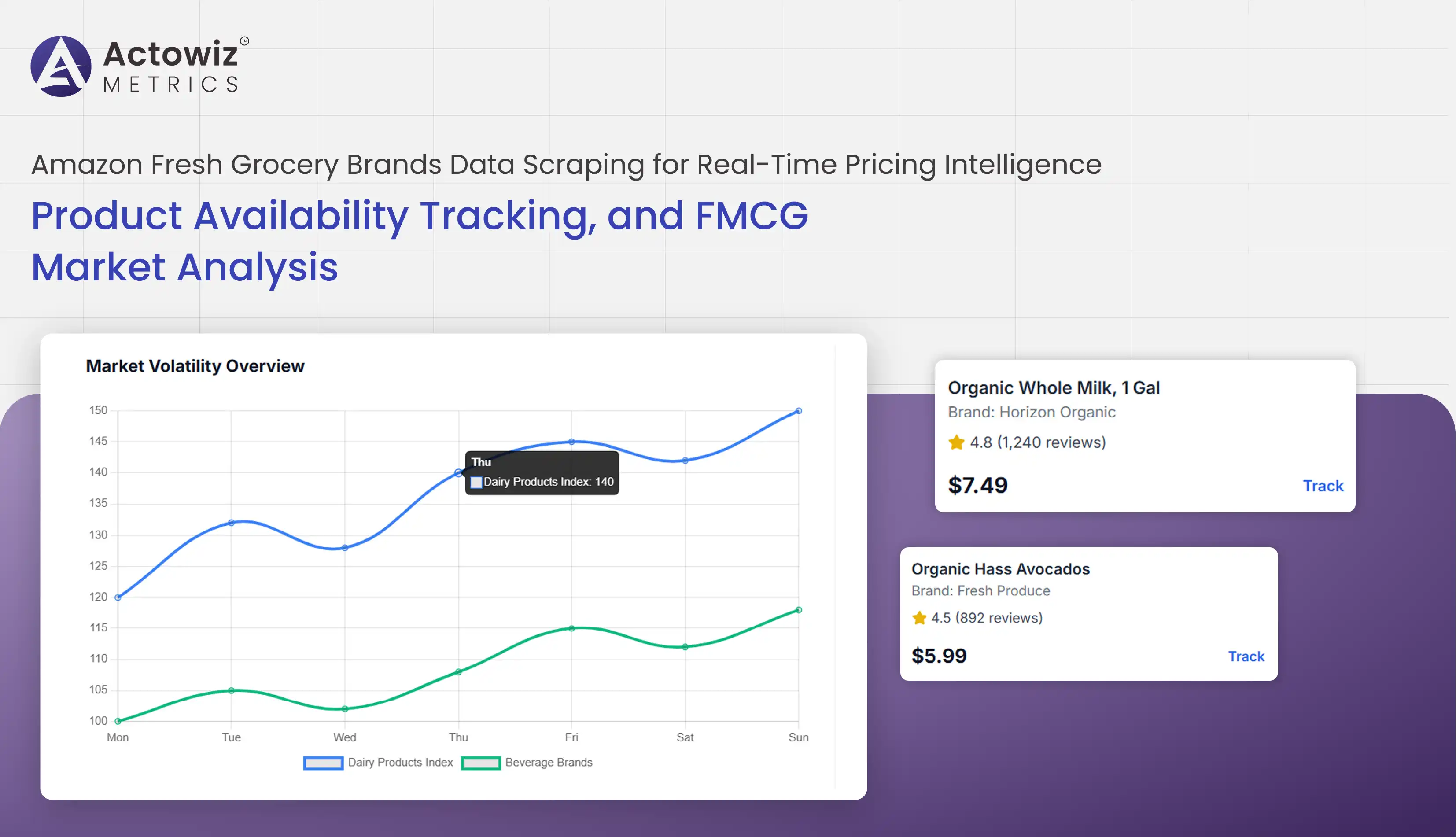
The grocery retail industry has undergone rapid digital transformation as consumers increasingly rely on online grocery marketplaces for daily shopping, product comparison, and home delivery services. Businesses operating within the FMCG and grocery sectors now depend heavily on real-time retail intelligence to monitor pricing changes, track product availability, analyze customer demand, and optimize operational strategies.
Modern enterprises use Amazon Fresh Grocery Brands Data Scraping solutions to automate large-scale grocery intelligence collection and improve market analysis capabilities. These systems help businesses gather structured product pricing, inventory updates, promotional activity, SKU-level insights, and customer demand patterns across Amazon Fresh marketplaces.
Advanced Amazon Fresh Marketplace Data Tracking technologies also help retailers, FMCG brands, and analytics firms improve competitive benchmarking, pricing optimization, and demand forecasting accuracy. Automated extraction systems reduce manual workloads while enabling faster and more scalable grocery intelligence operations.
According to retail market reports, online grocery commerce expanded significantly between 2020 and 2026 due to rising consumer demand for convenience, digital purchasing, and dynamic price comparison. Businesses investing in automated grocery analytics infrastructure improved operational efficiency, customer targeting, and forecasting capabilities.
This research report explores how Amazon Fresh grocery intelligence systems support real-time pricing analytics, SKU-level monitoring, demand forecasting, product availability tracking, and competitive market analysis across modern FMCG ecosystems.
The online grocery market experiences constant fluctuations in product pricing, availability, category demand, and promotional activity. Businesses relying on delayed or incomplete data often struggle to respond quickly to market changes.
Organizations increasingly implement Amazon Fresh Product Data Analysis systems to monitor grocery pricing trends, inventory levels, category performance, and customer demand patterns continuously.
Automated grocery intelligence platforms collect structured product data including prices, product descriptions, ratings, discounts, and stock availability across multiple grocery categories. Businesses can analyze product performance more efficiently while improving operational visibility and retail forecasting accuracy.
Between 2020 and 2026, the adoption of grocery analytics platforms increased significantly due to growing digital grocery competition and rising consumer purchasing activity.
| Year | Businesses Using Grocery Intelligence Systems | Daily Grocery Data Records Processed |
|---|---|---|
| 2020 | 22% | 12 million |
| 2021 | 29% | 17 million |
| 2022 | 37% | 24 million |
| 2023 | 46% | 32 million |
| 2024 | 55% | 42 million |
| 2025 | 65% | 54 million |
| 2026 | 74% | 68 million |
Product intelligence systems help businesses identify category-level demand shifts, optimize pricing strategies, and improve customer engagement across grocery marketplaces.
As digital grocery ecosystems continue expanding, structured retail intelligence will remain essential for long-term business growth and operational competitiveness.
Modern grocery businesses manage thousands of products across multiple categories, brands, and geographic markets. Maintaining accurate visibility into product catalogs and inventory changes is critical for operational planning.
Many organizations now implement Amazon Fresh SKU & Catalog Data Extraction systems to monitor SKU-level product information, inventory updates, category structures, and pricing fluctuations automatically.
Automated extraction platforms help businesses centralize grocery intelligence while improving inventory forecasting, category management, and assortment planning capabilities. Retailers can identify high-performing products, optimize replenishment schedules, and improve stock availability monitoring more effectively.
From 2020 to 2026, investment in SKU-level grocery intelligence systems increased rapidly due to rising demand for real-time retail visibility.
| Year | Businesses Using SKU-Level Grocery Analytics | Inventory Forecasting Accuracy Improvement |
|---|---|---|
| 2020 | 20% | 8% |
| 2021 | 27% | 12% |
| 2022 | 35% | 16% |
| 2023 | 44% | 21% |
| 2024 | 53% | 27% |
| 2025 | 63% | 33% |
| 2026 | 72% | 40% |
SKU-level grocery intelligence systems improve inventory management by delivering granular visibility into product availability, category demand, and sales activity.
Businesses can optimize supply chain operations while reducing stock shortages and improving customer satisfaction. As grocery retail becomes increasingly data-driven, SKU analytics will remain essential for operational efficiency and forecasting precision.
Online grocery marketplaces generate millions of product updates, pricing changes, and inventory fluctuations every day. Manual tracking methods are no longer scalable for enterprise grocery operations.
Retailers and analytics companies increasingly deploy systems to Scrape Amazon Fresh Product Listings for real-time grocery intelligence and structured marketplace monitoring.
Automated extraction systems continuously gather product titles, descriptions, prices, availability updates, discounts, customer ratings, and category information across grocery marketplaces. These systems improve operational efficiency while reducing manual research workloads.
Between 2020 and 2026, businesses investing in automated grocery intelligence infrastructure experienced significant improvements in retail visibility and reporting efficiency.
| Year | Businesses Using Automated Grocery Extraction | Daily Product Listing Updates Processed |
|---|---|---|
| 2020 | 21% | 11 million |
| 2021 | 28% | 16 million |
| 2022 | 36% | 22 million |
| 2023 | 45% | 30 million |
| 2024 | 54% | 40 million |
| 2025 | 64% | 52 million |
| 2026 | 73% | 66 million |
Automated product monitoring systems help businesses respond faster to changing market conditions while improving retail forecasting and operational planning capabilities.
As digital grocery marketplaces continue evolving, scalable product intelligence infrastructure will remain critical for competitive retail analytics and business growth.
Consumer purchasing behavior changes rapidly due to seasonality, promotions, economic conditions, and evolving shopping preferences. Businesses require accurate forecasting systems to optimize inventory planning and operational decision-making.
Organizations increasingly implement Amazon Fresh Grocery Demand Data Analytics solutions to analyze product demand patterns, regional purchasing trends, and category-level customer behavior.
Demand analytics platforms collect structured grocery intelligence that supports predictive forecasting, assortment optimization, and customer targeting strategies. Businesses can identify emerging purchasing trends while improving replenishment planning and operational responsiveness.
From 2020 to 2026, predictive grocery analytics adoption increased substantially across FMCG and retail sectors.
| Year | Businesses Using Grocery Forecasting Analytics | Improvement in Demand Forecasting Accuracy |
|---|---|---|
| 2020 | 19% | 7% |
| 2021 | 26% | 11% |
| 2022 | 34% | 15% |
| 2023 | 43% | 20% |
| 2024 | 52% | 26% |
| 2025 | 62% | 32% |
| 2026 | 71% | 39% |
Demand forecasting systems improve operational planning by helping businesses anticipate purchasing trends and optimize inventory allocation across multiple regions.
Retailers can reduce waste, improve product availability, and strengthen customer satisfaction through predictive grocery intelligence systems. As online grocery shopping continues expanding globally, demand forecasting analytics will remain essential for operational success.
Detailed SKU-level grocery data helps businesses evaluate pricing trends, inventory fluctuations, category performance, and customer purchasing behavior more accurately.
Many enterprises now deploy systems to Extract Grocery SKU data from Amazon Fresh for large-scale retail intelligence and operational forecasting initiatives.
Automated SKU extraction systems collect structured product metadata including prices, descriptions, package sizes, ratings, discounts, availability, and promotional activity. Businesses can centralize product intelligence while improving pricing analysis and category management strategies.
Between 2020 and 2026, businesses investing in structured SKU intelligence systems achieved measurable improvements in retail forecasting and product performance visibility.
| Year | Businesses Using Structured SKU Intelligence | Improvement in Product Analysis Efficiency |
|---|---|---|
| 2020 | 18% | 6% |
| 2021 | 25% | 10% |
| 2022 | 33% | 14% |
| 2023 | 42% | 18% |
| 2024 | 51% | 23% |
| 2025 | 61% | 29% |
| 2026 | 70% | 36% |
Structured SKU intelligence systems improve operational scalability by enabling businesses to process high-volume grocery datasets efficiently.
Retailers and FMCG brands gain stronger visibility into product performance trends while improving assortment planning and pricing optimization initiatives.
The grocery industry is highly competitive as retailers and FMCG brands continuously adjust pricing strategies, promotions, and product positioning to attract customers.
Organizations increasingly implement Amazon Fresh Brand Competition Analysis systems to monitor competitor pricing, category expansion, promotional campaigns, and inventory performance across grocery marketplaces.
Competitive intelligence systems help businesses evaluate market positioning, benchmark pricing strategies, and identify emerging opportunities within FMCG ecosystems. Automated extraction technologies improve visibility into category trends while supporting faster strategic decision-making.
From 2020 to 2026, adoption of grocery competitive intelligence systems increased rapidly due to rising digital grocery competition and evolving consumer expectations.
| Year | Businesses Using Competitive Grocery Analytics | Improvement in Pricing Responsiveness |
|---|---|---|
| 2020 | 20% | 7% |
| 2021 | 27% | 11% |
| 2022 | 35% | 15% |
| 2023 | 44% | 20% |
| 2024 | 53% | 26% |
| 2025 | 63% | 32% |
| 2026 | 72% | 39% |
Competitive grocery intelligence systems improve pricing optimization, customer targeting, and operational planning capabilities for retailers and FMCG businesses.
As online grocery ecosystems become increasingly data-driven, competitive benchmarking systems will remain essential for long-term market growth and profitability.
Actowiz Metrics helps retailers, FMCG brands, analytics firms, and grocery businesses simplify large-scale grocery intelligence operations through scalable automation infrastructure and advanced retail analytics systems.
Using enterprise-grade Amazon Fresh Pricing & Promotion Data Extraction technologies and scalable Amazon Fresh Grocery Brands Data Scraping systems, Actowiz Metrics enables businesses to collect structured pricing, inventory, promotional, SKU-level, and category intelligence efficiently.
Key advantages include:
Actowiz Metrics also provides customized grocery intelligence workflows, centralized dashboards, scalable extraction pipelines, and dedicated technical support for enterprise retail operations.
Businesses can leverage our expertise to improve demand forecasting, grocery analytics, pricing intelligence, and competitive retail benchmarking initiatives.
The grocery retail industry continues evolving rapidly as businesses increasingly rely on automated intelligence systems to optimize pricing, monitor inventory, improve forecasting accuracy, and strengthen customer engagement strategies.
Implementing scalable Amazon Fresh Grocery Brands Data Scraping systems enables retailers and FMCG brands to automate product intelligence collection, improve operational visibility, and strengthen competitive benchmarking capabilities effectively.
Advanced grocery intelligence platforms now play a critical role in monitoring pricing trends, analyzing product availability, forecasting customer demand, and optimizing retail decision-making across digital grocery ecosystems.
Businesses investing in scalable retail intelligence infrastructure between 2020 and 2026 will gain stronger operational efficiency, faster market responsiveness, and sustainable competitive advantages within evolving FMCG markets.
Ready to transform grocery analytics and improve retail intelligence operations? Connect with Actowiz Metrics today for scalable grocery data extraction and real-time FMCG market intelligence solutions!
Expert blogs, research reports and infographics — practical, data-driven reading across e-commerce and quick-commerce.
Most fields are optional — the more you share, the better your sample.

.webp "infographics")
.webp "infographics")