BLOG
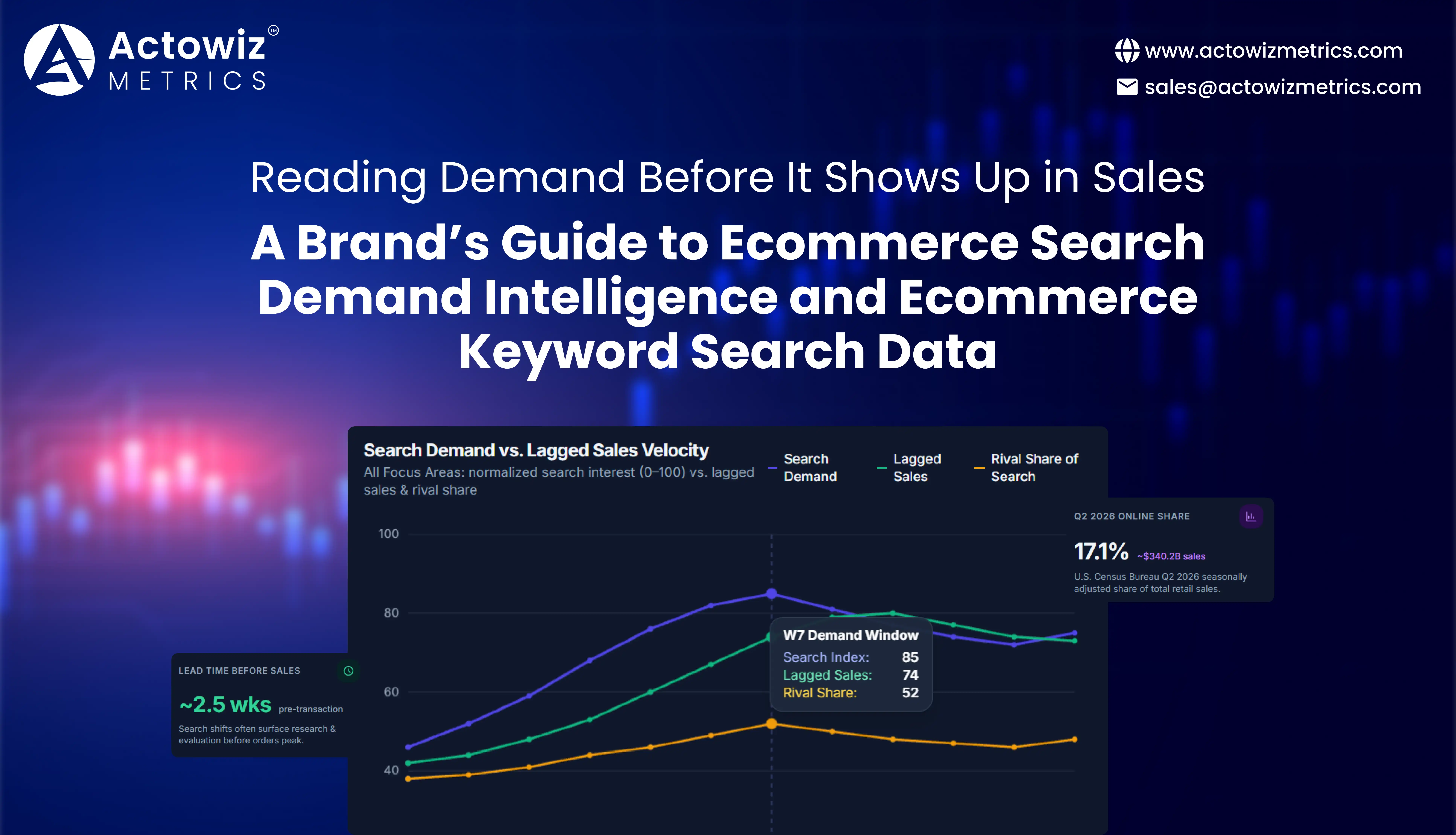
















Sales figures tell brands what customers have already purchased, but search behavior can reveal what shoppers are considering before those purchases happen. Ecommerce Search Demand Intelligence helps retailers identify emerging product interests, understand changing consumer preferences, monitor competitor visibility, and recognize demand opportunities before they become visible in sales reports.
For ecommerce businesses, understanding customer searches is essential for making informed decisions about product launches, inventory planning, pricing, and digital marketing. Search queries such as product names, brand comparisons, product specifications, and category-related phrases provide valuable information about customer requirements. When analyzed alongside pricing, availability, and marketplace performance, these signals help businesses understand where market demand is moving.
Demand Forecasting - Retail Demand Analytics combines historical sales patterns, search interest, seasonal behavior, and external market indicators to support better business planning. Instead of relying exclusively on previous transactions, retailers can use search intelligence to identify changing customer interests and prepare their product strategies accordingly.
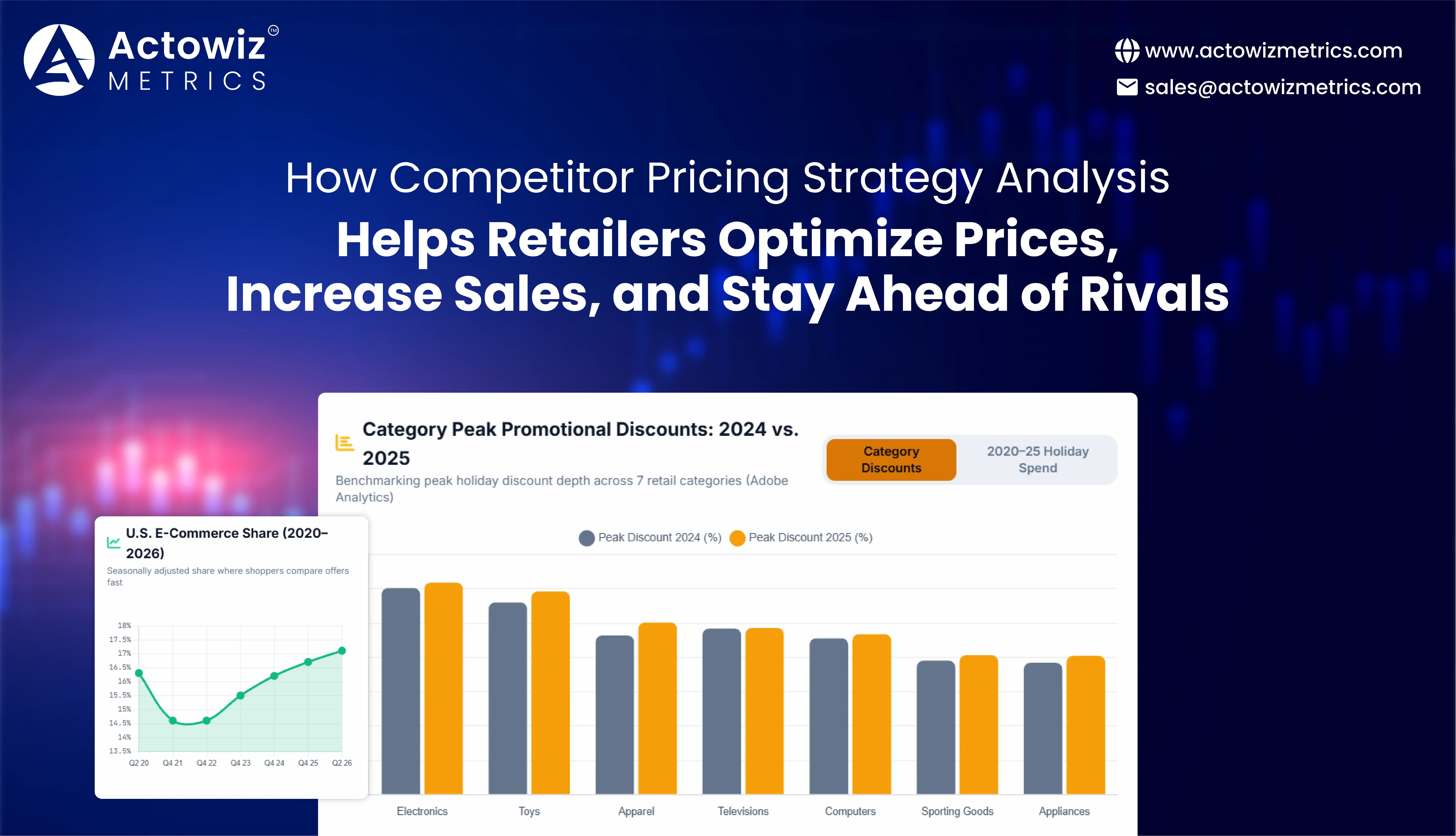
The opportunity is becoming increasingly important as online retail expands. According to the US Census Bureau, ecommerce represented 17.1% of total US retail sales in the second quarter of 2026, with online sales reaching approximately $340.2 billion. This demonstrates the growing importance of digital commerce, although search activity and purchasing activity must be measured separately.
Ecommerce Keyword Search Data Analysis helps brands understand which products, categories, and attributes shoppers are actively researching. Instead of waiting for transaction reports, businesses can monitor changes in search frequency, keyword variations, and product-related queries to identify potential demand shifts.
For example, increasing interest in a particular product category may indicate growing consumer awareness. Searches containing terms such as affordable, premium, lightweight, waterproof, or energy-efficient can also reveal which product attributes matter to shoppers.
Ecommerce Search Demand Intelligence becomes more valuable when search information is combined with other retail indicators. Retailers can compare search interest with product availability, competitor pricing, promotional activity, and sales performance to understand whether rising attention represents a meaningful commercial opportunity.
Google Trends provides a useful starting point for identifying relative search interest. Its data is normalized on a scale of 0–100 based on the proportion of searches within the selected geography and period. Therefore, its scores represent relative interest rather than absolute search volumes.
The following table uses the US Census Bureau's seasonally adjusted ecommerce share of total retail sales. It compares the same quarter across years to reduce seasonal differences.
| Year | Q2 ecommerce share of US retail |
|---|---|
| 2020 | 16.3% |
| 2021 | 14.6% |
| 2022 | 14.2% |
| 2023 | 15.3% |
| 2024 | 16.1% |
| 2025 | 16.3% |
| 2026 | 17.1% |
Source: US Census Bureau quarterly ecommerce sales data. Figures represent the seasonally adjusted share of total retail sales, not search volume.
The data shows that ecommerce's share of retail sales increased between the second quarters of 2022 and 2026. However, retailers should not interpret this growth as proof that every category is experiencing higher search demand. Category-level search analysis is necessary to identify where individual opportunities exist.
Product Keyword Search Trends help retailers identify the categories and product attributes receiving increasing attention. These trends can reveal whether customers are exploring new product types, comparing alternatives, or shifting toward different price and quality expectations.
A retailer selling consumer electronics, for example, can monitor searches related to battery capacity, screen size, storage, charging speed, and product compatibility. A fashion retailer can examine searches involving fabric, colors, sizes, seasonal collections, and particular styles.
Analyzing these variations provides more context than tracking product names alone. It helps businesses understand what customers expect from products and how those expectations change over time.
Google's ecommerce documentation explains that product information can appear across Google Search, Google Images, and Google Lens. This creates multiple discovery opportunities for businesses with accurate product information and suitable visibility strategies.
For retailers, the practical benefit is better product planning. If interest in a particular product attribute increases, merchandising teams can review their current assortment, identify missing product variations, and assess whether suppliers offer suitable alternatives.
However, a rising keyword trend does not automatically indicate a profitable opportunity. Brands should validate search patterns against competitor availability, product pricing, customer reviews, and actual purchasing behavior before changing their inventory strategy.
Consumer Purchase Intent Signals help businesses understand how close shoppers may be to making a purchase. Not all searches represent the same stage of the buying journey. Some indicate early research, while others suggest that customers are comparing specific products or preparing to buy.
For example, a broad query about running shoes may represent initial exploration. A search for lightweight running shoes for marathon training shows a more defined requirement. A query containing a specific brand and model may indicate stronger product consideration.
Ecommerce Search Demand Intelligence allows retailers to organize these search patterns into actionable intent categories.
| Search behavior | Possible intent | Recommended business action |
|---|---|---|
| Broad category searches | Initial discovery | Improve category content |
| Product feature searches | Research and evaluation | Highlight product specifications |
| Brand comparison searches | Competitive evaluation | Monitor competing products |
| Price-related searches | Budget consideration | Review pricing and promotions |
| Specific model searches | Product consideration | Improve product-page visibility |
These categories are analytical interpretations, not guaranteed predictions of individual customer behavior.
Google's merchant listing documentation explains that eligible product information can include price, availability, shipping, and return information in shopping experiences. Maintaining accurate information helps shoppers evaluate products before visiting a retailer's website.
Brands should also recognize that discovery is no longer limited to traditional keyword searches. Google's 2025 shopping updates introduced more conversational and visual discovery experiences, allowing consumers to explore products through natural-language questions and images.
This makes it important for ecommerce businesses to maintain complete, consistent, and understandable product information across their digital channels.
Brand Share of Search Monitoring helps businesses evaluate how frequently customers search for their brand compared with competing brands within a defined product category. It provides an additional perspective on brand awareness and changing market interest.
For example, an electronics retailer can monitor searches for several competing smartphone brands over the same period. If one brand gains relative search interest while another experiences a decline, the retailer can investigate whether product launches, advertising campaigns, pricing changes, or media coverage contributed to the movement.
Share of search should not be confused with market share. Search interest measures consumer attention, whereas market share measures commercial performance using an appropriate sales or revenue denominator.
| Indicator | What it helps businesses understand |
|---|---|
| Brand search interest | Relative consumer attention |
| Competitor search interest | Changes in competitive visibility |
| Category search interest | Overall category attention |
| Product-specific queries | Interest in individual product ranges |
| Geographic search interest | Regional differences in brand awareness |
| Search trend changes | Increasing or declining attention |
Google Trends allows users to compare multiple search terms and examine interest across different regions and periods. However, its normalized values should not be treated as absolute search counts.
Retailers can strengthen this analysis by combining search information with marketplace product listings, pricing records, promotional data, and product availability.
For instance, if a competing brand receives increasing search attention while offering more competitive prices, the retailer can investigate whether its own pricing or product assortment needs adjustment. Similarly, if brand searches increase after a product launch, merchandising teams can examine whether the new collection is receiving sufficient visibility.
The most effective approach is to maintain consistent measurement periods and comparable keyword groups. Comparing unrelated search terms or changing geographic settings between reporting periods can produce misleading conclusions.
For ecommerce decision-makers, this monitoring creates a structured way to evaluate brand attention and identify competitive movements before relying on sales results alone.
Early Ecommerce Demand Signals can help retailers recognize changing consumer interests before those changes become obvious in transaction reports. These signals are especially useful when businesses need to make decisions about inventory, promotional calendars, product launches, and supplier coordination.
Ecommerce Search Demand Intelligence brings together several information sources to provide a more complete picture of potential demand.
The US ecommerce market provides useful context for understanding the importance of digital demand monitoring.
| Period | Verified market development | Business implication |
|---|---|---|
| 2020 | Ecommerce reached 16.3% of US retail sales in Q2 | Review rapid changes in online shopping behavior |
| 2021 | Ecommerce represented 14.6% in Q2 | Distinguish temporary shifts from lasting changes |
| 2022 | Ecommerce represented 14.2% in Q2 | Evaluate category-level demand independently |
| 2023 | Ecommerce represented 15.3% in Q2 | Monitor renewed online retail expansion |
| 2024 | Ecommerce represented 16.1% in Q2 | Strengthen digital merchandising strategies |
| 2025 | Ecommerce represented 16.3% in Q2 | Compare online growth with category performance |
| 2026 | Ecommerce represented 17.1% in Q2 | Prioritize ongoing digital demand intelligence |
Source: US Census Bureau, Quarterly Retail E-Commerce Sales. These figures represent ecommerce as a percentage of total US retail sales, not consumer search activity.
The figures demonstrate why retailers should maintain continuous monitoring rather than depend on occasional market research. However, historical ecommerce growth alone cannot predict future product demand.
A practical approach involves connecting search intelligence with operational decisions.
First, businesses should identify products and categories receiving increasing attention. Next, they should compare these findings with current inventory, supplier lead times, competitor pricing, and product availability.
If search interest increases but product availability remains limited, procurement teams can investigate whether additional inventory is justified. If interest rises around a particular feature, product managers can review whether their current assortment addresses that requirement.
Retailers should also separate short-lived search spikes from sustained growth. Google explains that Google Trends incorporates statistical noise, particularly noticeable for queries with low search interest. Therefore, isolated spikes should not be treated as definitive evidence of a lasting trend.
A stronger decision framework combines repeated observations, multiple data sources, and commercial validation.
Marketplace Search Demand Forecasting helps ecommerce businesses use historical search patterns, market information, and commercial indicators to estimate potential changes in product interest.
Traditional forecasting often emphasizes previous sales, seasonal performance, and historical inventory movement. These indicators remain important, but they may not reveal emerging customer requirements immediately.
Adding search-related information creates another perspective. For example, a retailer can compare category search interest with historical sales, promotional activity, product prices, and availability to understand whether customer attention is changing before transactions reflect that movement.
| Dataset | Forecasting purpose |
|---|---|
| Historical search interest | Identifies changes in customer attention |
| Historical sales records | Establishes previous purchasing patterns |
| Product pricing data | Tracks price movements and competitive positioning |
| Inventory availability | Identifies potential supply limitations |
| Promotional information | Helps explain campaign-related demand changes |
| Seasonal records | Identifies recurring calendar patterns |
| Competitor product information | Provides additional market context |
Retailers should collect these datasets using consistent product identifiers, category definitions, time intervals, and geographic classifications. Without standardization, the same product may appear under different names across marketplaces, creating inaccurate comparisons.
Retailers should avoid assuming that higher search interest will always result in higher sales. Search activity can reflect curiosity, research, price comparisons, or interest that never converts into a purchase.
Google's documentation also highlights the importance of accurate product data across its shopping experiences. Product attributes, prices, and availability can influence how product information is understood and presented to shoppers.
For better forecasting, businesses should combine search indicators with verified commercial records and continuously measure forecast accuracy. This creates a more dependable foundation for merchandising, inventory allocation, and marketing decisions.
Actowiz Metrics helps businesses turn fragmented ecommerce information into structured market intelligence that supports product planning, competitive research, and retail decision-making. By combining search-related insights with product, pricing, and marketplace information, retailers can develop a clearer understanding of changing market conditions.
Its data intelligence capabilities can support businesses in several important areas.
1. Monitor Consumer Search Behavior
Businesses can analyze product-related search information to identify emerging interests, changing category preferences, and variations in customer requirements. This helps marketing and merchandising teams understand which products deserve closer attention.
2. Track Competitive Market Movements
Combining Share of Search insights with competitor product information helps businesses evaluate brand visibility and investigate changes in competitive positioning. Retailers can compare product categories, pricing strategies, and assortment movements to identify potential market opportunities.
3. Improve Retail Planning
Search trends become more useful when connected with inventory, pricing, and historical sales information. Businesses can use these combined insights to evaluate purchasing requirements, review promotional strategies, and improve product assortment decisions.
4. Support Data-Driven Forecasting
Ecommerce Search Demand Intelligence provides an additional information layer for businesses developing demand analysis frameworks. Retailers can examine historical patterns, changing product interests, and competitive information to support more informed forecasting decisions.
5. Strengthen Digital Market Research
Structured ecommerce datasets help businesses organize information across multiple products, categories, and online marketplaces. Consistent records make it easier to identify market changes, compare competing retailers, and evaluate opportunities across different regions.
By integrating reliable data collection with structured analysis, Actowiz Metrics helps ecommerce businesses move beyond isolated market observations and develop actionable retail intelligence.
Understanding customer demand requires more than reviewing historical sales reports. Search behavior provides an additional perspective on what shoppers are researching, comparing, and considering before making purchasing decisions.
From identifying emerging product interests to evaluating competitor visibility and improving inventory planning, search intelligence helps retailers make decisions using a broader range of market indicators. Combining search trends with pricing, availability, historical transactions, and marketplace information creates a stronger foundation for commercial planning.
As ecommerce continues to expand, businesses need consistent data monitoring and accurate market analysis to recognize opportunities and respond to changing customer expectations. Integrating Digital Shelf Analytics with search and competitive intelligence can further help retailers understand product visibility, pricing, and availability across digital channels.
Ready to turn changing customer demand into actionable business intelligence? Partner with Actowiz Metrics to strengthen your ecommerce research, uncover market opportunities, and make smarter data-driven decisions!
Ecommerce Search Demand Intelligence analyzes customer search behavior to identify product interests, emerging trends, category opportunities, and changing consumer preferences before they appear clearly in sales reports.
Demand Forecasting - Retail Demand Analytics combines historical sales, seasonal patterns, search interest, and inventory information to help retailers estimate potential demand and make informed purchasing decisions.
Ecommerce Keyword Search Data Analysis helps businesses understand popular product searches, identify customer requirements, discover category opportunities, and improve product visibility across ecommerce channels.
Product Keyword Search Trends reveal increasing interest in product categories, specifications, and features, helping retailers investigate emerging opportunities and adjust merchandising strategies using additional market evidence.
Actowiz Metrics helps businesses organize ecommerce information, monitor competitors, analyze product trends, and use structured market intelligence to support informed retail and merchandising decisions.
Expert blogs, research reports and infographics — practical, data-driven reading across e-commerce and quick-commerce.
Most fields are optional — the more you share, the better your sample.

.webp "infographics")
.webp "infographics")