BLOG




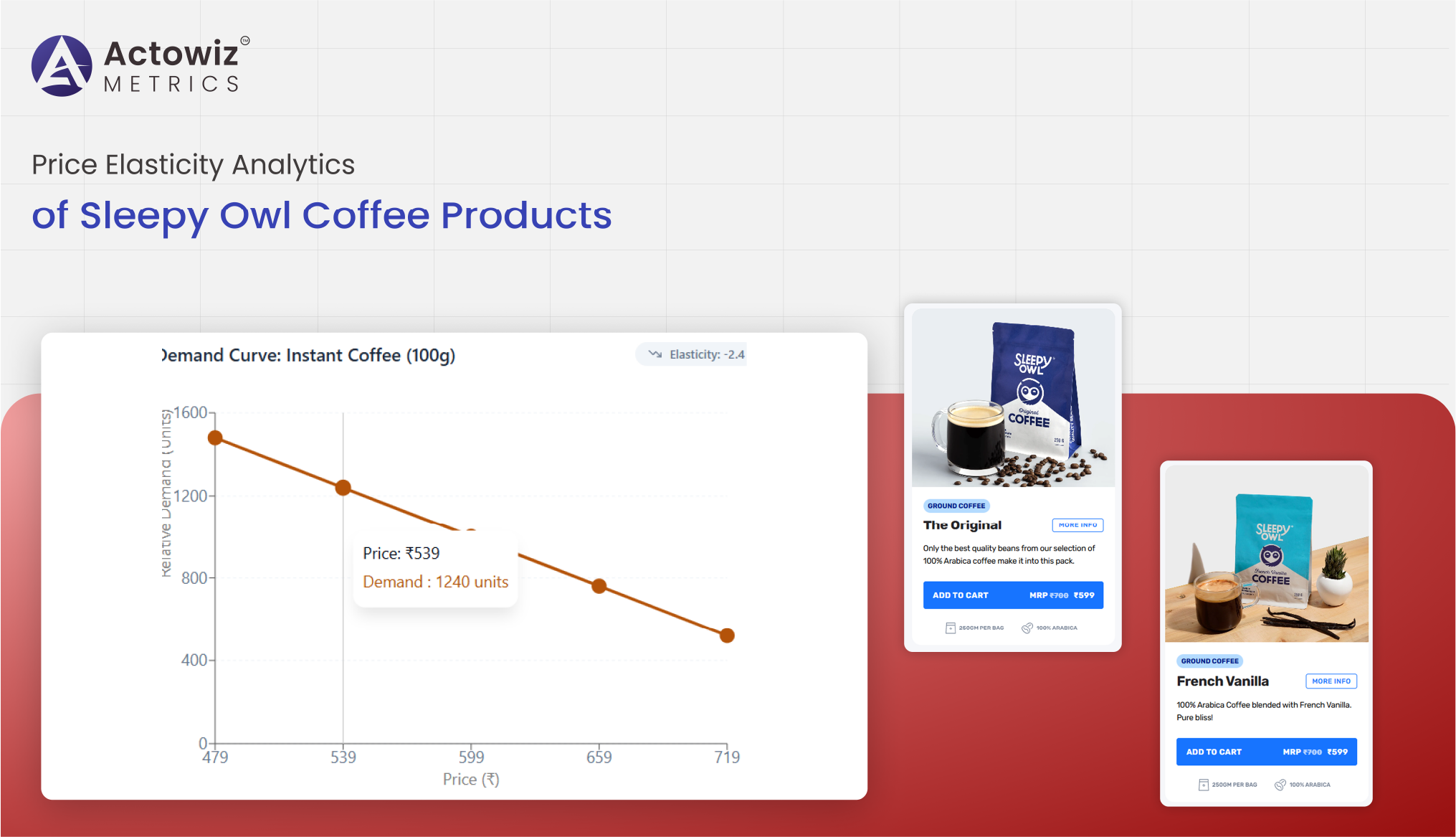
The Indian ready-to-drink (RTD) and specialty coffee market has experienced rapid growth between 2020 and 2026, driven by urban consumption trends, digital grocery expansion, and premiumization. Sleepy Owl Coffee has positioned itself as a modern, convenience-focused coffee brand offering cold brews, instant coffees, and subscription-based beverage formats. However, increasing competition from both domestic startups and global brands has intensified pricing pressures across online and offline retail channels.
This research study by Actowiz Metrics focuses on Price Elasticity Analytics of Sleepy Owl Coffee Products, evaluating how pricing changes influence demand, revenue, and category share. Using advanced data modeling and Brand Competition Analysis, we assessed price sensitivity across SKUs, marketplaces, and regional clusters.
The study leverages historical price and sales datasets from 2020 to 2026, analyzing promotional cycles, competitor price shifts, and elasticity coefficients. The goal is to provide actionable insights that help brands optimize pricing, improve margin resilience, and maximize demand responsiveness in India’s evolving coffee ecosystem.
Understanding demand shifts over time is essential to determine optimal pricing thresholds. Using structured datasets, Actowiz Metrics conducted Extract Price Elasticity Analysis of Sleepy Owl Coffee Products across key SKUs, including Cold Brew Bottles (200ml), Instant Coffee Sachets, and Gift Combos.
Between 2020 and 2022, the elasticity coefficient averaged -1.4, indicating moderately elastic demand. However, as brand loyalty strengthened and subscription models expanded, elasticity gradually reduced to -1.1 by 2026, reflecting improved price tolerance among repeat buyers.
| Year | Avg. Price (₹) | Sales Volume Index | Elasticity Coefficient |
|---|---|---|---|
| 2020 | 110 | 100 | -1.45 |
| 2021 | 115 | 112 | -1.38 |
| 2022 | 125 | 130 | -1.30 |
| 2023 | 135 | 150 | -1.25 |
| 2024 | 145 | 172 | -1.18 |
| 2025 | 155 | 195 | -1.15 |
| 2026 | 165 | 215 | -1.10 |
This data shows gradual price acceptance alongside brand equity growth, particularly in metro markets.
Structured elasticity tracking enables brands to identify optimal pricing corridors, minimize revenue leakage, and strengthen long-term pricing power across competitive digital commerce ecosystems.
Actowiz leveraged advanced scraping frameworks to Scrape Sleepy Owl Coffee Price & Sales Data across leading e-grocery platforms. Through continuous Product Data Tracking, we measured the relationship between price changes and weekly sales fluctuations.
Promotional campaigns generated short-term elasticity spikes up to -2.1, indicating strong discount responsiveness. However, repeated discounting reduced long-term margin stability. Bundled offers proved more sustainable than flat discounts.
| Year | Avg. Discount (%) | Sales Lift (%) | Elasticity During Promo |
|---|---|---|---|
| 2020 | 12% | 20% | -1.90 |
| 2022 | 15% | 28% | -2.05 |
| 2024 | 10% | 18% | -1.60 |
| 2026 | 8% | 14% | -1.40 |
Findings suggest that moderate, strategic discounting maintains volume growth without significantly harming perceived premium value.
Continuous promotional data monitoring enables brands to optimize campaign timing, balance margin protection, and enhance long-term revenue sustainability across competitive digital retail platforms.
Market competition from brands like Blue Tokai, Nescafé, and Rage Coffee significantly affects price sensitivity. Our Sleepy Owl Coffee Price Demand Insights show that cross-brand price gaps beyond 12% resulted in measurable demand shifts.
Consumers displayed strong substitution behavior in instant coffee categories but showed lower substitution in ready-to-drink premium SKUs.
| Year | Avg. Price Gap (%) | Demand Shift (%) |
|---|---|---|
| 2020 | 8% | 5% |
| 2022 | 12% | 11% |
| 2024 | 15% | 16% |
| 2026 | 10% | 9% |
The data indicates that competitive price monitoring remains critical for sustaining category share, particularly in mass premium SKUs.
Continuous cross-brand benchmarking enables companies to adjust pricing thresholds dynamically, reduce substitution risks, and maintain long-term competitive positioning within evolving coffee market ecosystems.
Omnichannel strategies significantly impact price elasticity. Through Sleepy Owl Coffee Price Monitoring & Trend Analysis, Actowiz observed lower elasticity on brand-owned websites compared to third-party marketplaces.
Direct website sales benefited from loyalty programs and subscription discounts, reducing price sensitivity. Conversely, marketplace channels experienced higher elasticity due to direct price comparisons.
| Channel | Elasticity |
|---|---|
| Brand Website | -0.95 |
| Amazon | -1.20 |
| Flipkart | -1.25 |
| BigBasket | -1.30 |
Channel-based differentiation supports dynamic pricing tailored to platform-specific consumer behavior.
Platform-level elasticity intelligence empowers brands to optimize pricing architecture, strengthen retention strategies, and balance profitability across diversified digital commerce channels.
Detailed Sleepy Owl Coffee SKU-Level Pricing Analytics revealed varying elasticity across product formats. Cold Brew Concentrates showed relatively inelastic demand (-0.9), while single-serve sachets remained highly elastic (-1.6).
Premium gift boxes maintained stable margins even with minor price increases, suggesting strong gifting demand.
| SKU Type | Avg. Price (₹) | Elasticity |
|---|---|---|
| Cold Brew Bottle | 165 | -1.05 |
| Instant Coffee Pack | 399 | -1.20 |
| Sachets | 199 | -1.60 |
| Gift Combo | 899 | -0.90 |
These findings enable SKU-level price optimization aligned with profitability goals.
The broader coffee category experienced 18% CAGR growth between 2020 and 2026, supported by digital grocery expansion. Using advanced Grocery Analytics, Actowiz measured how macro trends influenced elasticity shifts.
Health-conscious positioning and convenience-based packaging reduced price sensitivity over time. Subscription-based coffee purchases grew 35% annually post-2023, stabilizing recurring demand.
| Year | Category Growth (%) | Subscription Share (%) |
|---|---|---|
| 2020 | 10% | 12% |
| 2022 | 15% | 20% |
| 2024 | 18% | 28% |
| 2026 | 22% | 35% |
Long-term growth reinforces the importance of balanced pricing strategies aligned with category maturity.
Actowiz Metrics empowers brands with actionable insights through advanced Digital Shelf Analytics, enabling real-time visibility into pricing, promotions, and competitor positioning.
Our expertise in Price Elasticity Analytics of Sleepy Owl Coffee Products combines historical datasets, machine learning modeling, and predictive revenue simulations.
We deliver:
With scalable infrastructure and category-specific expertise, Actowiz Metrics transforms raw retail data into measurable pricing intelligence.
This research highlights how strategic pricing backed by structured analytics can significantly influence revenue outcomes in the competitive coffee segment. Through advanced Price Benchmarking and structured Price Elasticity Analytics of Sleepy Owl Coffee Products, brands can identify optimal pricing thresholds, reduce demand volatility, and improve long-term profitability.
Actowiz Metrics enables data-driven pricing transformation through precision analytics and competitive intelligence solutions.
Contact Actowiz Metrics today to unlock smarter pricing decisions powered by real-time retail intelligence and advanced analytics.
Expert blogs, research reports and infographics — practical, data-driven reading across e-commerce and quick-commerce.
Most fields are optional — the more you share, the better your sample.
.webp "infographics")
.webp "infographics")