BLOG



















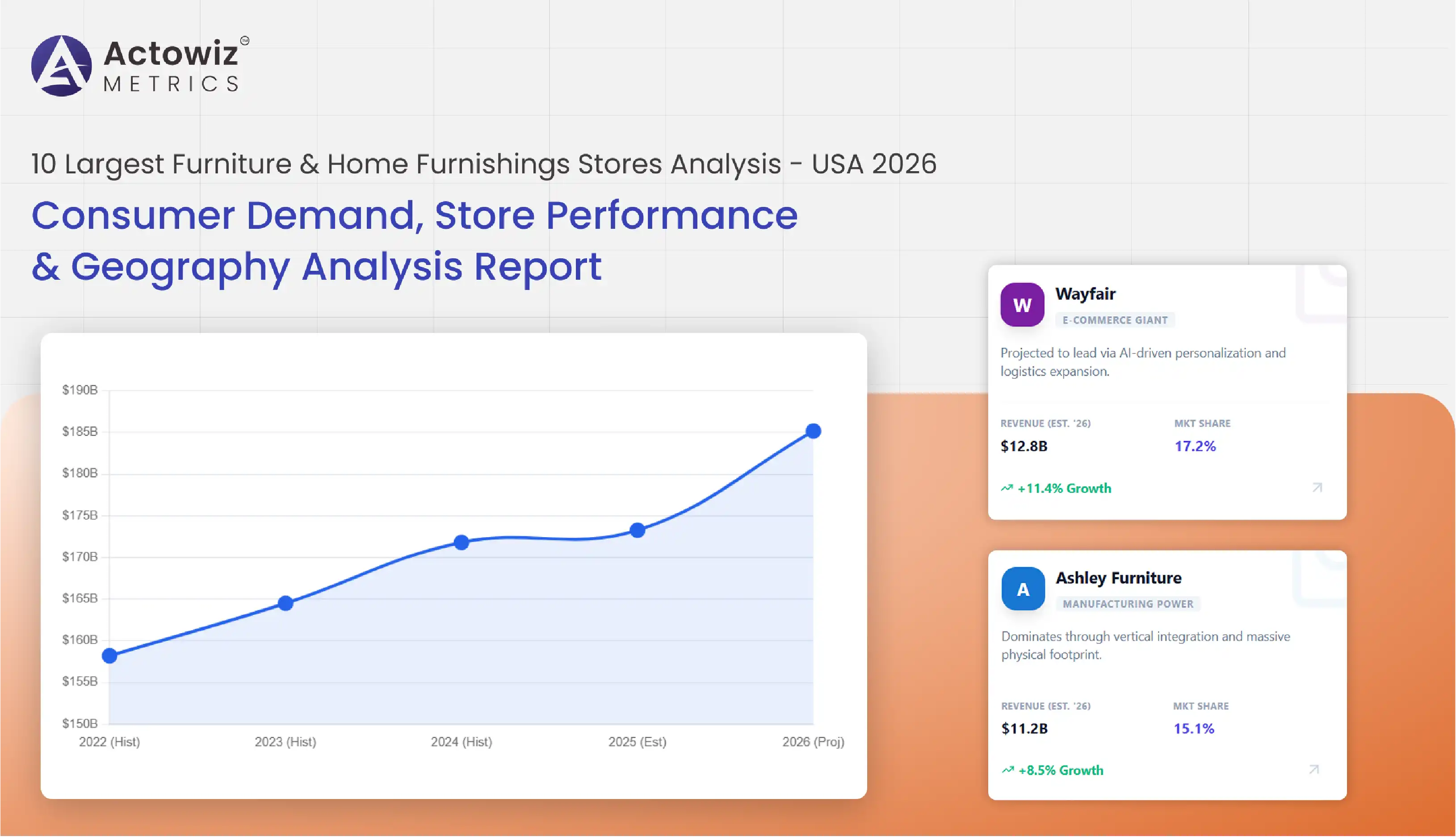
The US furniture and home furnishings industry has undergone substantial transformation between 2020 and 2026, driven by shifting consumer lifestyles, e-commerce expansion, and rapid digital adoption. Home improvement trends, hybrid work environments, and rising demand for customized interiors have accelerated the growth of furniture retailers across the country.
In this evolving retail ecosystem, 10 Largest Furniture & Home Furnishings Stores Analysis - USA 2026 provides valuable insights into consumer demand, store performance, pricing strategies, and geographic expansion trends. Simultaneously, E-commerce Analytics has become a crucial capability for retailers aiming to optimize digital shelf visibility, pricing intelligence, and customer engagement strategies.
Furniture retailers are increasingly investing in omnichannel experiences, combining physical store expansion with digital commerce capabilities. The competitive landscape is now defined by data-driven decision-making, supply chain optimization, and advanced customer analytics.
Between 2020 and 2026, the US furniture market has grown from approximately $120 billion to over $190 billion, with online furniture sales accounting for nearly 38% of total revenue by 2026. Companies leveraging advanced retail analytics report up to 35% improvement in inventory management and 28% higher conversion rates. This report explores the trends, competitive shifts, and analytical strategies shaping the future of the US furniture industry.
The US furniture market is dominated by large retail chains that continue expanding through omnichannel operations, private-label products, and digital-first strategies.
| Year | Top 10 Furniture Retailers Market Share | Online Revenue Contribution |
|---|---|---|
| 2020 | 48% | 18% |
| 2022 | 55% | 25% |
| 2024 | 61% | 32% |
| 2026 | 68% | 38% |
Through Scraping Largest Furniture Stores Data In USA 2026, businesses can analyze pricing structures, promotional strategies, and product availability across major retail chains. This intelligence supports effective Product Data Tracking, enabling retailers to identify high-performing product categories and optimize inventory planning.
From 2020 to 2026, furniture retailers increased digital catalog expansion by more than 70%, while consumer demand for online home furnishing purchases grew sharply due to convenience and virtual shopping experiences.
Location strategy has become one of the most important competitive factors in the furniture industry. Retailers are increasingly targeting suburban and fast-growing urban regions where housing development is accelerating.
| Region | Furniture Retail Growth (2020–2026) | Store Expansion Rate |
|---|---|---|
| Northeast | 12% | 9% |
| Midwest | 15% | 11% |
| South | 24% | 20% |
| West | 19% | 16% |
Using Extracting Home Furnishings Store Locations & Pricing Data US, organizations can gain visibility into regional pricing differences, market saturation levels, and store distribution strategies. Combined with Map Monitoring, businesses can identify underserved markets and expansion opportunities more effectively.
Between 2020 and 2026, retailers using geographic intelligence systems achieved up to 30% improvement in regional demand forecasting and optimized delivery logistics significantly.
The furniture retail landscape is becoming increasingly data-centric, with chains using analytics to improve pricing strategies, customer engagement, and product assortment planning.
Web Scraping Furniture Retail Chains Data USA 2026 enables businesses to monitor competitor catalogs, promotional campaigns, and seasonal demand patterns across major retail networks.
| Metric | 2020 | 2023 | 2026 |
|---|---|---|---|
| Online SKU Availability | 55% | 72% | 90% |
| Dynamic Pricing Adoption | 20% | 45% | 70% |
| AI-Based Recommendations | 15% | 38% | 68% |
Retailers leveraging automated scraping and analytics tools reported up to 40% faster reaction times to market changes and improved promotional campaign performance by nearly 25%.
Detailed store-level analytics are becoming critical for operational efficiency and strategic planning in furniture retail.
US Furniture Store Database Extraction 2026 allows organizations to collect structured datasets on store locations, inventory levels, delivery coverage, and customer service performance.
Between 2020 and 2026, businesses adopting centralized retail intelligence platforms achieved:
The increasing use of AI-driven store databases has enabled furniture retailers to better align stock levels with regional buying patterns, especially during seasonal demand spikes.
Consumer purchasing behavior in the furniture sector has changed dramatically due to hybrid work culture and rising home renovation investments.
| Category | Demand Growth (2020–2026) |
|---|---|
| Home Office Furniture | 85% |
| Modular Furniture | 52% |
| Luxury Furnishings | 35% |
| Outdoor Furniture | 48% |
By leveraging Track Largest Furniture Stores Data In USA 2026, businesses can monitor real-time shifts in product demand and identify emerging consumer preferences.
This approach helps retailers optimize procurement strategies, reduce stockouts, and improve product availability across both physical and digital channels. Companies using advanced tracking systems achieved up to 27% higher sales forecasting accuracy between 2020 and 2026.
Digital commerce is now central to furniture retail growth, with consumers relying heavily on online browsing before making purchasing decisions.
Digital Shelf Analytics enables retailers to analyze search rankings, product visibility, pricing consistency, and customer reviews across digital marketplaces and retail websites.
| Digital Metric | 2020 | 2026 |
|---|---|---|
| Online Product Visibility Impact on Sales | 42% | 68% |
| Mobile Commerce Share | 28% | 55% |
| Customer Review Influence | 50% | 74% |
Between 2020 and 2026, retailers investing in digital shelf optimization improved conversion rates by up to 33% and increased customer retention through personalized shopping experiences.
Digital shelf intelligence is now essential for maintaining competitiveness in the increasingly crowded furniture retail ecosystem.
Modern furniture retail analytics requires scalable intelligence systems capable of processing large volumes of structured and unstructured market data.
Price Benchmarking enables retailers to compare product pricing across competitors, helping maintain competitiveness while protecting margins.
10 Largest Furniture & Home Furnishings Stores Analysis - USA 2026 powered solutions from Actowiz Metrics provide deep visibility into store performance, pricing strategies, product demand, and geographic expansion trends.
Actowiz Metrics delivers:
These capabilities help furniture retailers make faster, smarter, and more profitable business decisions.
The US furniture and home furnishings industry is entering a new era defined by digital transformation, omnichannel retailing, and data-driven intelligence. Companies that adopt advanced analytics systems can better understand consumer demand, optimize pricing, and strengthen operational efficiency.
Brand Competition Analysis plays a vital role in helping retailers benchmark performance, identify market gaps, and respond effectively to changing consumer expectations.
10 Largest Furniture & Home Furnishings Stores Analysis - USA 2026 provides critical insights into the future of the industry, enabling organizations to navigate market complexity with confidence.
With Actowiz Metrics, businesses gain access to real-time retail intelligence, advanced analytics solutions, and actionable insights that drive long-term growth and competitive advantage.
Connect with Actowiz Metrics today to transform furniture retail data into strategic business intelligence and stay ahead in the evolving US home furnishings market!
Expert blogs, research reports and infographics — practical, data-driven reading across e-commerce and quick-commerce.
Most fields are optional — the more you share, the better your sample.


.webp "infographics")
.webp "infographics")